
Safety First
Most tool injuries aren’t caused by bad tools — they’re caused by skipping a five-minute precaution. This guide covers the protective gear and habits that turn a risky job into a routine one, whether you’re doing a quick fix or a full weekend project.
Essential Personal Protective Equipments (PPE)
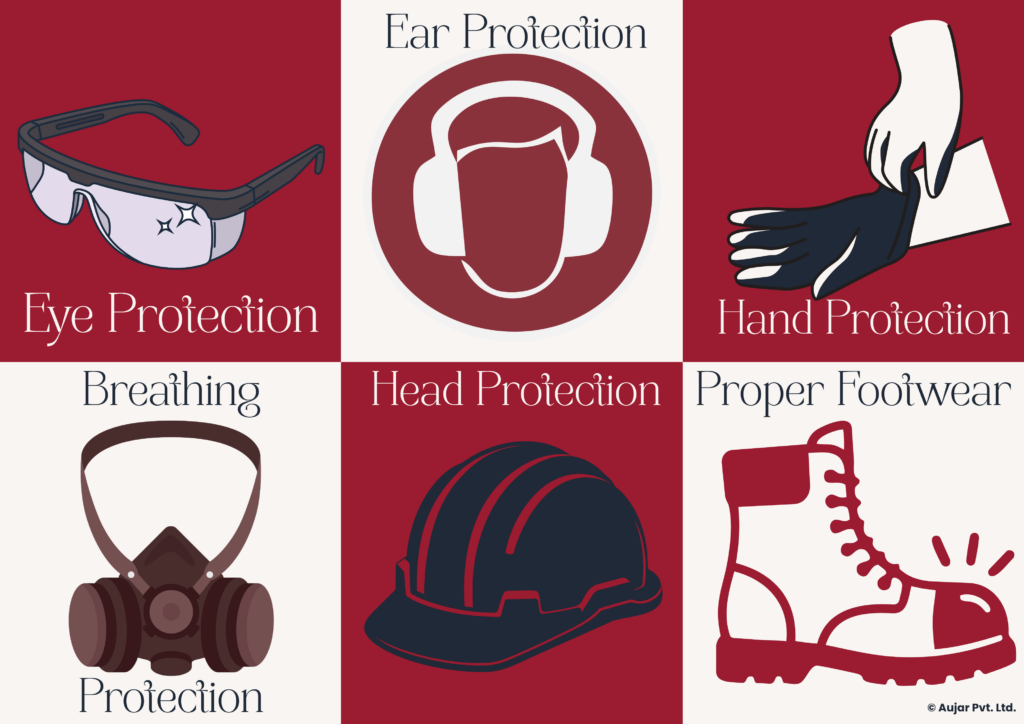
| PPE | What it protects | Use it when |
| Eye protection | Eyes, from flying debris and dust | Drilling, cutting, grinding, sanding, hammering |
| Hearing protection | Hearing, from prolonged loud noise | Using power tools for extended periods |
| Hand protection | Hands, from cuts, splinters, and heat | Handling sharp materials, sanding, working with metal |
| Breathing protection | Lungs, from dust and fumes | Sanding, cutting wood/masonry, working with paint or solvents |
| Head protection | Head, from falling objects or low clearances | Working under structures, on ladders, in tight overhead spaces |
| Proper footwear | Feet, from dropped tools or sharp debris | Any job involving heavy tools or materials |
Before You Start, Check This
- Basic first aid kit within reach of your work area
- Know where your nearest fire extinguisher is
- Someone else aware of what you’re working on, especially for solo jobs
General Safety Practices
The habits that actually prevent most tool injuries — from disconnecting power before adjusting anything, to keeping your own tools well maintained.
Tool-Specific Notes
Angle grinders, drills, saws, and ladders each carry their own specific risks. Here’s what to watch for with each.
Still Not Sure What Gear You Need?
Tell us what you’re working on and we’ll point you to the right protective equipment.