
Tools 101
Buying tools for the first time can feel overwhelming; rows of drills, wrenches, and gadgets you’re not sure you’ll ever use. This guide covers the tools that actually get used in most Nepali homes, what each one is for, and a few tips so you don’t overspend on the wrong thing.
Hand Tools You’ll Actually Use
| Tool | What’s it for | Buying Tip |
| Hammer (claw) | Driving and removing nails, light demolition | A mid-weight hammer (16–20 oz) handles most home jobs — heavier isn’t always better |
| Screwdriver set | Furniture, switches, general assembly | Get a set with both Phillips and flathead in several sizes, not just one of each |
| Pliers (combination + needle-nose) | Gripping, bending, cutting wire | Combination pliers for general grip, needle-nose for tight spaces |
| Adjustable wrench | Nuts, bolts, plumbing fittings | One 8″ and one 10″ wrench covers almost everything a home needs |
| Tape measure | Measuring for furniture, shelving, curtains | 5m is enough for most rooms; go for one with a locking button |
| Utility knife | Opening boxes, trimming material, scoring | Buy one with retractable/replaceable blades — don’t try to sharpen a dull one |
| Hex key (Allen key) set | Flat-pack furniture, bicycles | Most flat-pack furniture ships with one, but a full set saves you when it’s missing |
| Spirit level | Hanging shelves, frames, curtain rods straight | A 30cm level is enough for most household use |
Power Tools Worth Having
| Tool | What’s it for | Buying Tip |
| Drill/Impact driver | Drilling holes, driving screws | The single most useful power tool for a home — start here if buying only one |
| Angle grinder | Cutting metal, tile, sharpening | Only needed for heavier DIY or workshop use — skip if you’re just hanging shelves |
| Circular saw | Cutting wood to size | Useful if you’re building furniture or shelving from scratch |
| Jigsaw | Curved or detailed cuts in wood | A step up from a circular saw for shaped cuts, not a first purchase |
Corded or Cordless Power Tools?
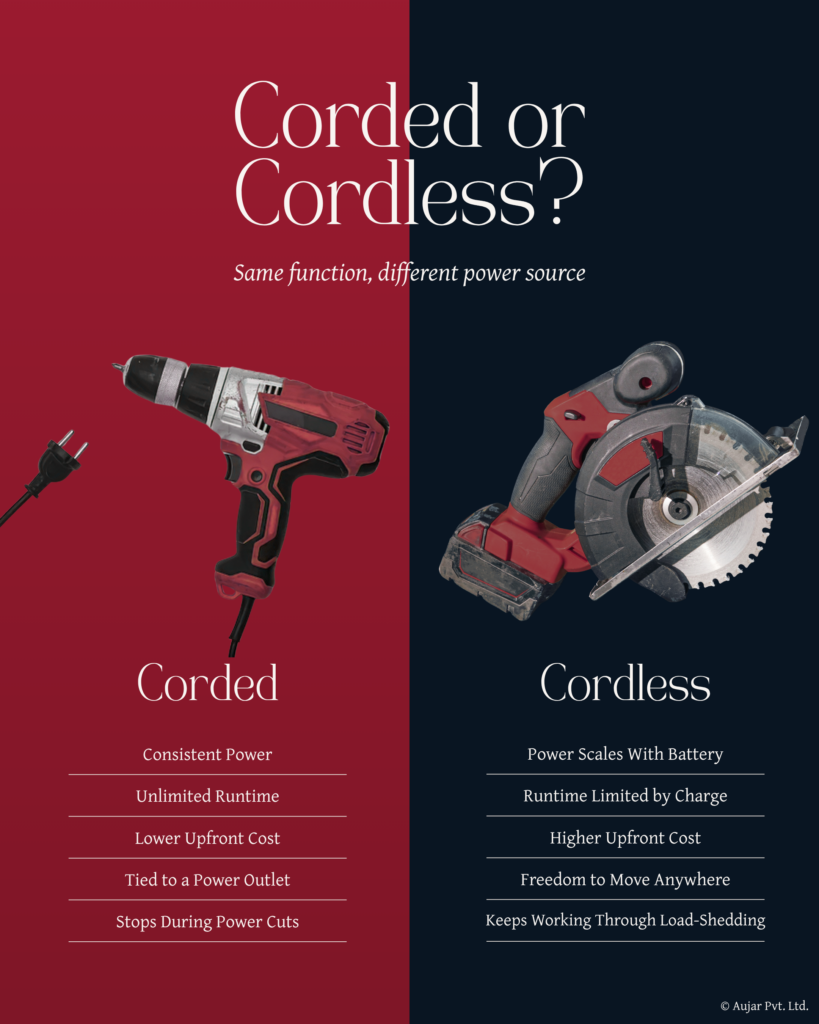
For most home users in Nepal, cordless is worth the extra cost — it means tools still work during a load-shedding cut, and one battery platform (same brand) can often power a drill, driver, and other tools.
Brushed vs. Brushless Motors on Power Tools
Every power tool’s motor is one of two types, and it affects price, runtime, and how long the tool lasts. Brushed motors are cheaper and fine for occasional use; brushless costs more but runs cooler, lasts longer, and gets more out of every battery charge.
Cheap vs. Expensive Tools: What You’re Paying For
A higher price isn’t always worth it — it depends on how often you’ll use the tool, and whether you’re buying into a cordless battery platform you’ll be stuck with later. Here’s how to think about both.
Building a Starter Toolkit
Buying your first toolkit? See the full Starter Toolbox guide for the complete 15-item list and what each tool actually replaces.
Still Not Sure What You Need?
Tell us what you’re working on and we’ll point you to the right tools.